The Anatomy Of a Beautiful Kitchen
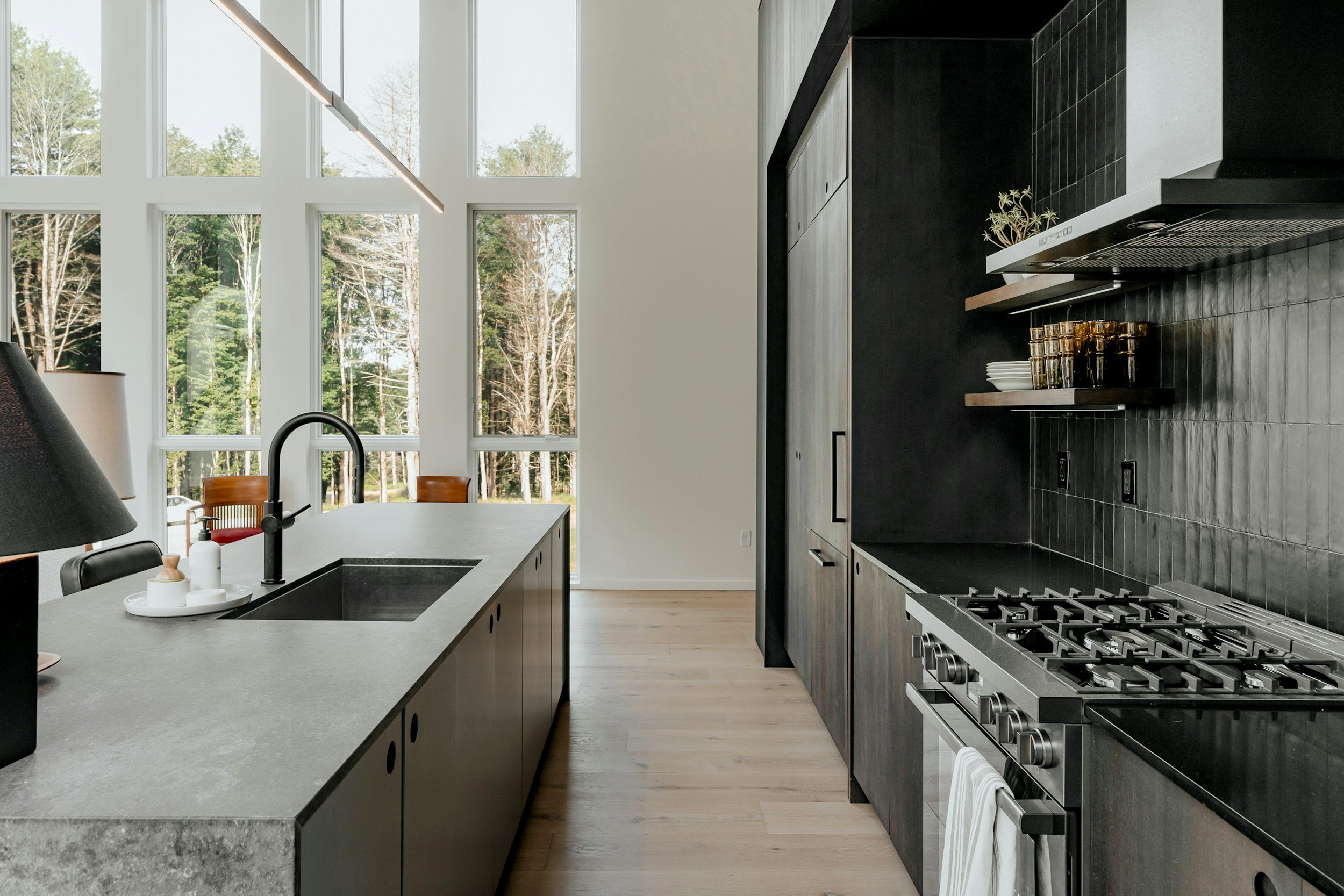
Walk into a beautiful kitchen and most people look at the stone, the lighting, or the appliances. They point at the range or the island and say, “this is stunning.”
But the real reason a kitchen feels calm, expensive, and intentional usually has nothing to do with the obvious pieces.
It comes from the parts you never consciously see.
The human brain reads order long before it recognizes design. When something is slightly off, you feel it instantly even if you cannot explain why. A cabinet door that lands a fraction too high. A reveal that changes width across a run. A drawer that closes with a different tone than the others.
Your brain registers inconsistency as tension.
Great cabinetry removes tension.
Below are the details that quietly determine whether a kitchen feels architectural or accidental.
1. The Sound of the Kitchen
Close three cabinet doors in most homes and you will hear three different sounds: A hollow clap. A dull thud. A rattling echo.
People think soft close hardware solves this. It does not. Soft close controls speed. It does not control resonance.
The sound of a cabinet is determined by five things:
Door weight and density
Box rigidity
Back panel thickness
Joinery method
How precisely the door meets the frame
When these are engineered correctly, every door produces the same low, controlled tone. Not silence. Consistency.
You feel quality with your ears before your eyes ever understand it.
This is why luxury kitchens feel calm. There is no acoustic chaos.
2. Mind The Gap
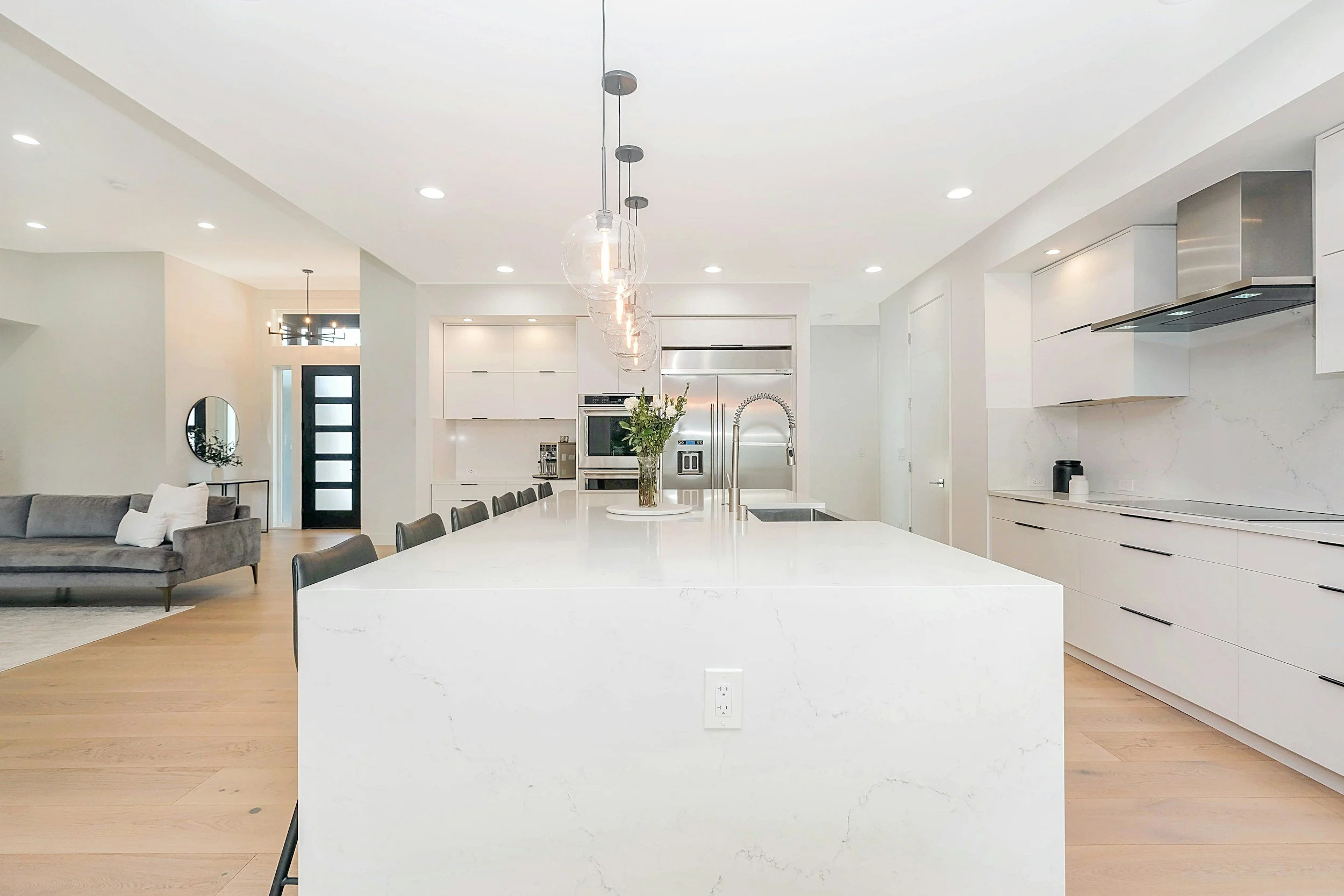
The most important dimension in cabinetry is not width or height; It is the negative space between parts. In cabinet-speak, we call this “reveals.”
A kitchen with inconsistent spacing subconsciously reads as assembled instead of designed. Even if each cabinet is beautiful on its own, the composition feels unsettled.
Our eyes track patterns instinctively. When gaps vary, the brain works to reconcile them. That effort creates visual fatigue.
True custom cabinetry is less about making cabinets and more about controlling geometry across an entire room.
Instead of fitting cabinets into a space, the space is disciplined around the cabinetry grid.
Walls are adjusted. Ceilings are considered. Appliance panels are engineered to maintain rhythm. The room becomes a coordinated system rather than a collection of objects.
Most homeowners never identify this directly. They simply describe the result as “clean.”
Clean is mathematical consistency.
3. A wall of cabinets only looks flat when it is not flat
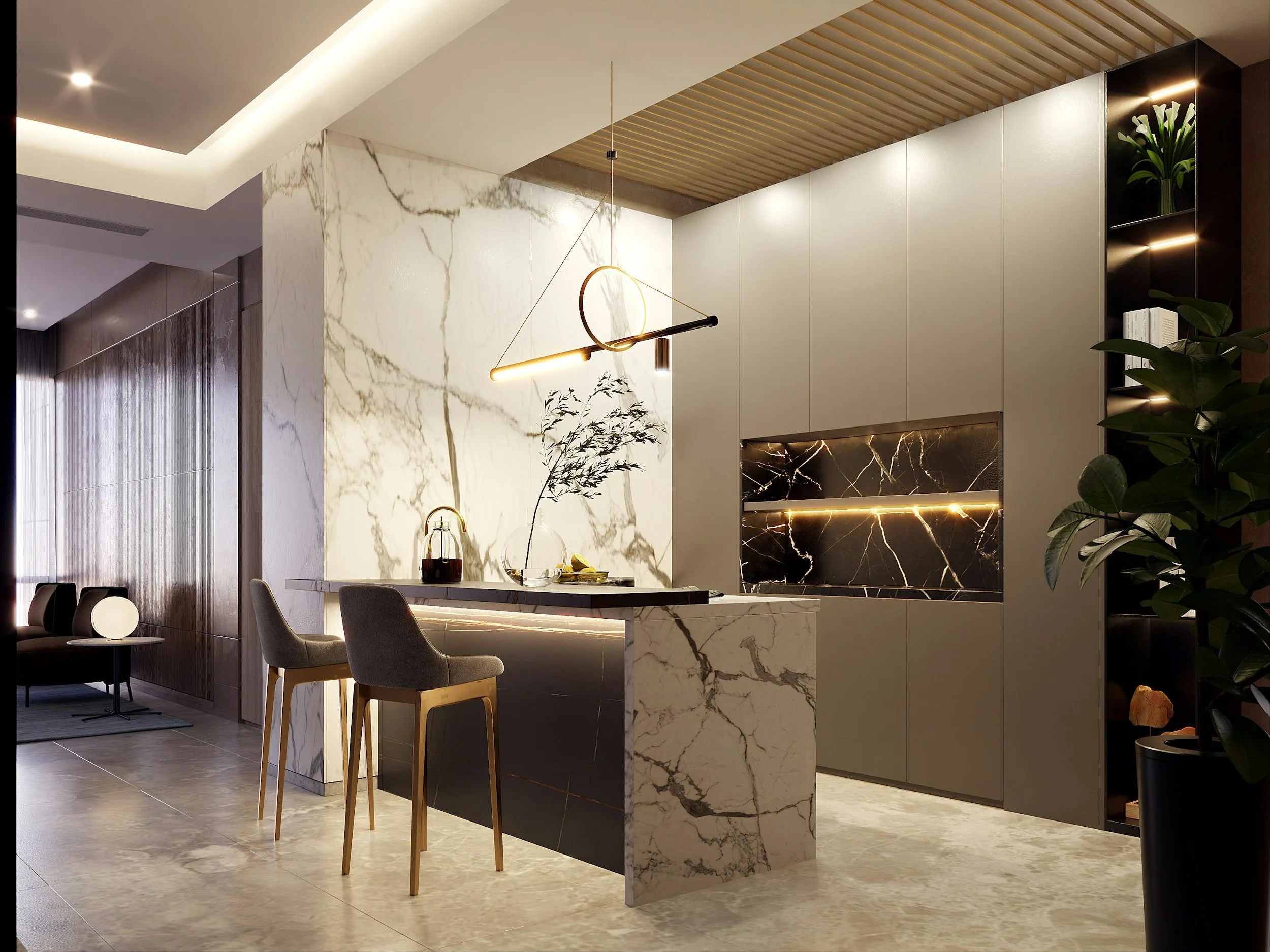
Perfectly flush cabinetry actually requires intentional variation. Floors move. Houses settle. Materials expand. Light reveals every imperfection.
If a cabinet installer forces everything into one rigid plane, time exposes the error. Doors begin to fight the structure around them.
Instead, cabinetry must be installed with micro-adjustments that anticipate movement. Panels float where necessary. Tolerances exist where the eye cannot detect them but physics requires them.
The paradox is simple: A kitchen that looks perfectly still has been designed to move.
Ready to Elevate Your home?
Contact us today to schedule a consultation and discover how our custom cabinetry can transform your Scottsdale home.
4. Touch Before Sight
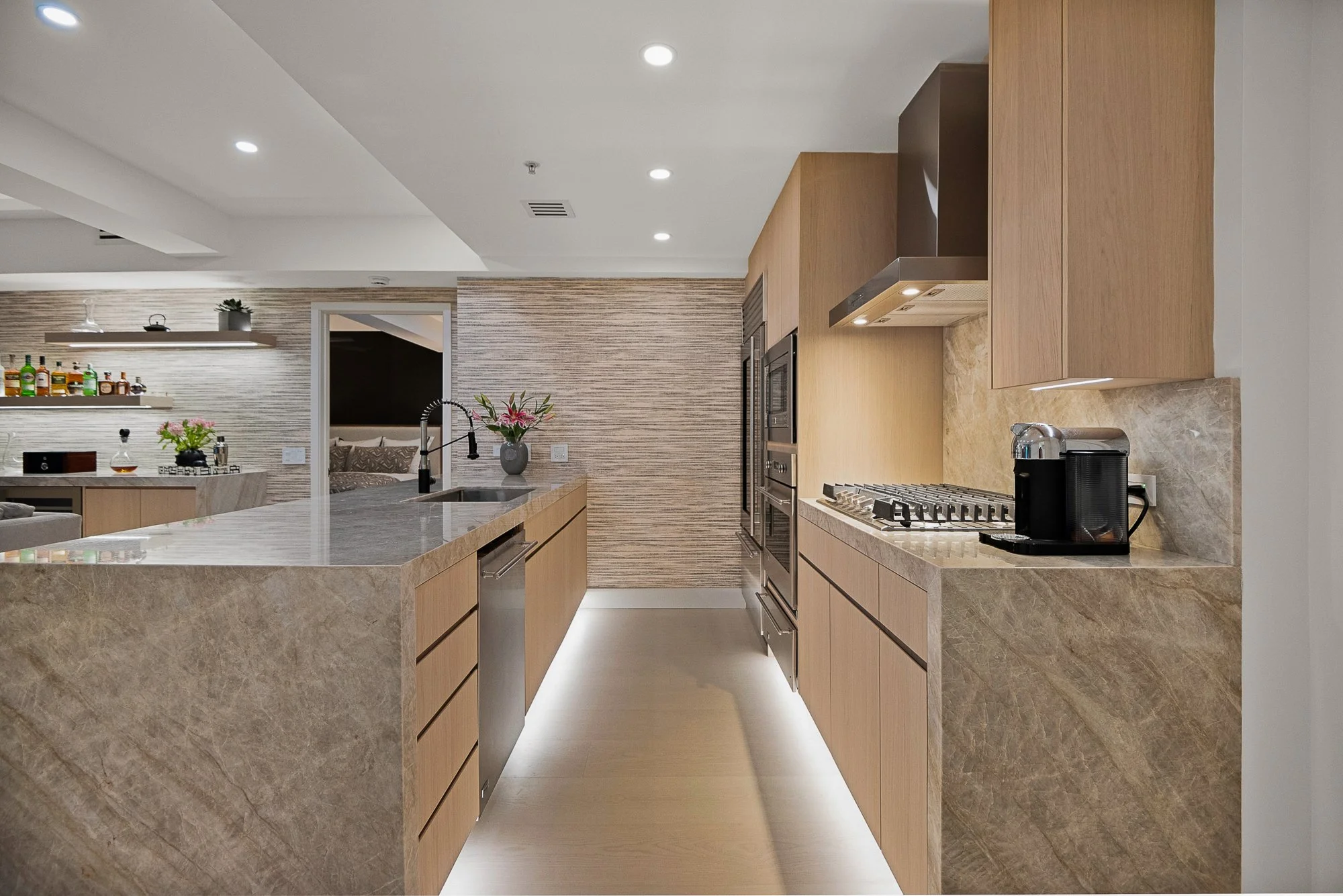
Most design decisions are made visually. Cabinetry quality is judged tactilely.
Run your hand across an average painted door and you feel edges. Corners feel sharp or fragile. Profiles change slightly where sanding was uneven. The finish sits on the surface.
Now touch a properly built and finished door.
Edges feel deliberate. Profiles feel carved instead of machined. The finish feels integrated rather than applied. Your hand slows down without you realizing it.
This matters more than color or style because humans trust touch more than sight. When touch confirms solidity, the entire room feels grounded.
People rarely say “the tactile experience is exceptional.” They say “it just feels expensive.”

5. Symmetry Doesn’t Always Win
Many homeowners request symmetry everywhere. Equal cabinets. Equal panels. Equal spacing.
Symmetry is comforting but architecture often requires hierarchy instead.
A well designed kitchen quietly guides your attention. The eye lands where it should first, then moves naturally through the space.
Sometimes that means a wider drawer bank near the range. A slightly heavier hood presence. A pantry section that anchors the room.
When everything is equal, nothing is important.
When proportions are balanced but not mirrored, the space feels intentional rather than decorative.
This difference separates furniture placed in a room from cabinetry that defines the room.
6. Aging Gracefully
The real test of cabinetry is not how it looks on installation day. It is how it behaves three years later.
Poor cabinetry announces its age quickly:
doors drift
finishes chip at edges
drawers develop play
adjustments become routine
Well built cabinetry becomes quieter over time. Materials settle into equilibrium instead of fighting it. Hinges remain aligned because they were not compensating for structural weakness. Finishes wear evenly instead of breaking at stress points.
A kitchen should mature the way good architecture does. Subtle patina rather than visible deterioration.
The goal is not perfection forever. The goal is stability.
Ready to Build A Beautiful Kitchen?
Contact us today to schedule a consultation and discover how our custom cabinetry can transform your Scottsdale home.
PIN ME FOR LATER